Preview
Hüseyin Akbulut, MSc (2026). From the Cell to the Unknown: Homeostasis and Metabolism. Sporeus. Retrieved, November 18, 2026. https://sporeus.com/en/science/cell-homeostasis-metabolism/
The principle at the heart of physiology is homeostasis: creating healthy conditions for the cell. One example is the way the body regulates its internal balance against external conditions such as air temperature.
When it comes to heat, the body usually responds by sweating and tries to cool itself through the skin. If these balancing mechanisms do not work properly, the human body cannot carry out its functions and life processes come to an end.
To understand this, we first need to understand cells and how they work together.
The discovery of the cell goes back to the work of Robert Hooke in the 17th century. Robert Hooke examined cork tissue with a compound microscope he had developed himself and published his findings in 1665 in his book Micrographia.
What he saw were structures that looked like small chambers, and he called them “cells” (little rooms). That is why the word cell originally means a small room. The cell is regarded as the most basic building block of an organism. A cell does not necessarily contain organelles, but it must have a cell membrane.
An adult human body is estimated to contain about 37 trillion cells.
Traditionally, about 200 different cell types are counted in the human body; recent single-cell atlas studies suggest the number runs to several hundred. All of them have a cell membrane. With exceptions such as the mature red blood cell, these membranes contain organelles, which take part in everything from the cell’s homeostasis to its life processes.
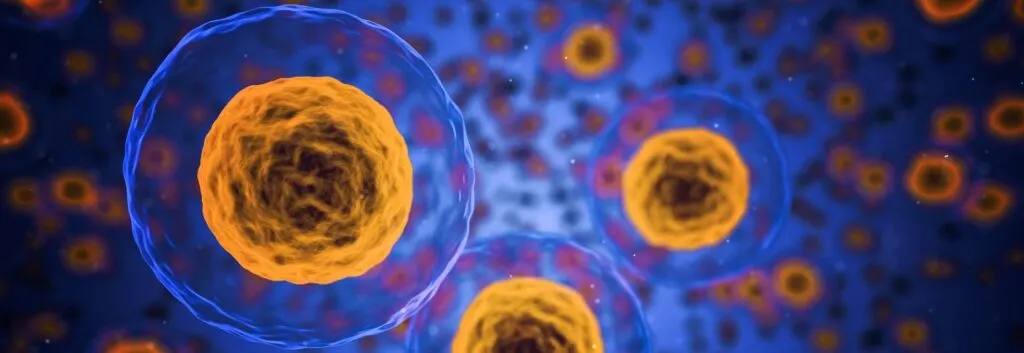
These organelles are also important for the cell’s synthetic work. They take part in breaking down and storing proteins, lipids and carbohydrates.
To keep our cells going, we need oxygen and nutrients. This is how the body grows and renews itself and how we keep our community of cells alive. We call these processes metabolism: the sum of all the chemical reactions that take place in the body.
We have already named the biomolecules used in these processes, and we all know them well: proteins, carbohydrates and lipids. From their conversion into amino acids, simple sugars and fatty acids to metabolism as a whole, there is a great deal to learn.
The better we understand how our body works, the better we understand how to manage the process of development.
You may also like: Why and How: Questions to Ask Before Exercise Physiology (in Turkish)
References
- Gest H. (2004). The discovery of microorganisms by Robert Hooke and Antoni van Leeuwenhoek, Fellows of The Royal Society. Notes and Records of the Royal Society of London, 58(2): 187–201. doi:10.1098/rsnr.2004.0055
- Cannon WB. (1929). Organization for physiological homeostasis. Physiological Reviews, 9(3): 399–431. doi:10.1152/physrev.1929.9.3.399
- Billman GE. (2020). Homeostasis: the underappreciated and far too often ignored central organizing principle of physiology. Frontiers in Physiology, 11: 200. doi:10.3389/fphys.2020.00200

Hüseyin Akbulut is the founder of Sporeus and author of THRESHOLD (EŞİK), a 540-page Turkish-language book on endurance science.
- 540pp THRESHOLD Book
- MSc Sport Sciences
- Marmara University