Preview
Hüseyin Akbulut, MSc (2026). Cycling Training: Effects on the Human Body. Sporeus. Retrieved, November 18, 2026. https://sporeus.com/en/sport/cycling-training-effects-on-the-body/
As most of us have probably known for years, the human body has an enormous capacity to adapt to training and physical load. Cycling training, too, brings about important acute and chronic changes in the body. As far as we know and can observe, these changes affect us positively, from physiology to psychology.
Table of Contents
By training every day and exposing the body to certain loads and stresses, we can transform it. The most visible result, of course, is that over the long term the body becomes fitter. As a result, we can do work that demands more energy with less effort. But does that really matter so much?
Physical performance has many components, such as endurance, speed, power, agility and coordination.
Our bodies respond differently to different kinds of training and exercise. If we try to describe the physical effects of training, a list like the following appears in almost every sport and exercise textbook:
Positive Physical Effects
- The oxygen-carrying capacity of your cardiorespiratory system increases significantly.
- Your heart rate falls (both at rest and at a given submaximal exercise intensity).
- Your heart becomes stronger and more efficient.
- Your blood pressure falls and your blood vessels become more elastic.
- Your lungs become more efficient.
- Your muscles get stronger.
- Your bones get stronger.
- The agility and range of motion of your joints increase.
- Energy production in your muscles becomes more efficient.
- You lose weight and get leaner.
Alongside these general effects, in this article we will focus on points specific to cycling. Cycling has an interesting world of its own. Both amateurs who take up the sport and professionals who have raced for many years seem to change their lives and eating habits considerably after they start riding. Cyclists seem to know that their bodies need looking after.
If we look at the effects of cycling on health markers:
Effects on Health Markers
- Your cholesterol levels improve (LDL falls, HDL rises).
- Your insulin levels improve (fall).
- Your blood sugar levels improve (fall).
- It supports bone health, but because cycling is a non-weight-bearing sport its contribution to bone density is limited, so it should be complemented with resistance training.
- Your body fat percentage (BFP) falls significantly.
- Your blood volume increases.
- The total amount of haemoglobin in your blood and the myoglobin in your muscles increase.
- Your blood’s buffering capacity increases (important for sustaining exercise).
- Your immune system becomes healthier.
- Your stress response becomes more balanced; less adrenaline is released at the same submaximal load.
- The enzymes in your muscles become more efficient.
Prevention is better than cure.
Aerobic exercise in general, and cycling in particular for the purposes of this article, may play a role in preventing and perhaps treating many physical and mental complaints.
Conditions It Is Known to Help
- Heart and coronary disease
- Diabetes
- Osteoporosis
- Stroke
- Certain cancers (colon, uterine, breast)
- Some lung diseases (bronchitis, emphysema and asthma)
- Depression and stress
- Rheumatoid arthritis
- Cystic fibrosis
- Problems of ageing
Of course, cycling should not be seen as a cure for everything. But many studies show the positive effects of cycling on quality of life and health markers. If we look at the effects of cycling that are more mental in nature, we might come up with a list like this.
Effects on Mental Health and Well-Being
- You feel better.
- You sleep better.
- It calms you down.
- You feel younger and fitter.
- Your concentration improves.
- You become more resilient to stress.
- Your quality of life improves.
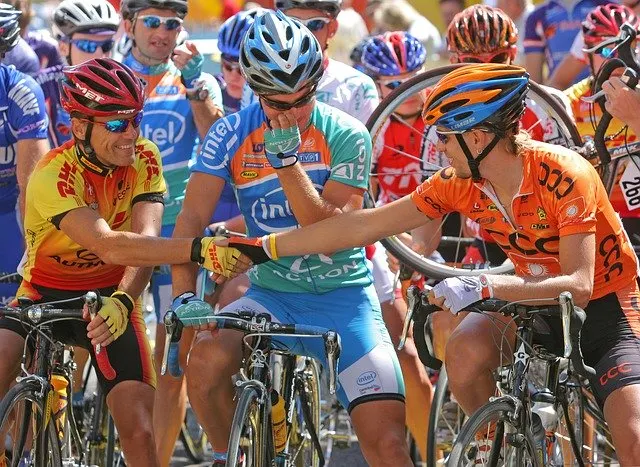
If we think about it for a moment, these are the moments when life is lived most intensely. The freedom and happiness we feel so strongly are among the most precious emotions we can have. Perhaps, when we roam freely on a bike or in the many sports we do outdoors, we feel what our ancestors felt as they roamed the earth throughout history.
If you do not ride a bike, you may find this a little hard to believe. But it is not hard to experience.
Many studies have shown that levels of endorphins and endocannabinoids in the blood rise during endurance exercise. For the relaxation and sense of well-being felt after exercise, current research points to endocannabinoids more than endorphins. Unfortunately, not everyone experiences this effect to the same degree. If you are new to cycling, you may feel tired rather than happy for a while; the positive effect of regular exercise on mood usually becomes clear within weeks.
You can ride at any time that suits you. You can do it on your own, to relax, to meditate or to listen to the birds. Or you can complete your rides chatting with a friend. Of course, if you have started cycling to compete, you may soon need to set these aside and focus on your training.
Cycling Training: An Introduction to the Physiology
In short, if we treat the human body as a machine (and millions might argue against that), we can start with the cardiovascular system, which delivers oxygen to the muscles and removes the resulting waste products and metabolites from them.
We have a system. So how is its capacity determined? What does it depend on? What do the muscles use as fuel, and how much power can they produce? What are the effects of exercise?
Effects
A planned and balanced training programme brings about adaptations in the muscles, the heart and the circulatory system.
Muscles
Our leg muscles get stronger first. At this point we see a high level of muscle building. The muscle tissue also needs a network of blood vessels to supply it, and much more. Tissues and cell components that increase in muscle with training:
- Number of mitochondria (the cell’s energy-producing machinery)
- Size of the muscle fibres
- Number of capillaries and blood flow through them
- ATP (adenosine triphosphate) and glycogen stores
- Amount and activity of enzymes (which help break down glycogen and fatty acids)
Research has shown that endurance training can change the properties of muscle fibres. The most marked change is a shift within the fast-twitch fibres towards more oxidative subtypes (from type IIx to type IIa); full conversion of fast fibres into slow fibres is limited in humans. Achieving this requires consistent, focused training.
At first, these stresses can cause some damage to the muscle. You may feel these effects as training soreness or fatigue. Later, however, the muscles adapt, develop and become stronger (I would say better adapted), and in the end they can withstand loads much better. But this takes a substantial amount and duration of training. Even so, do not rush. Give your body time.
Heart
The heart’s adaptation to training is remarkable.
The size of the heart muscle fibres and the number of capillaries increase. With each beat, the stronger heart sends more blood into the circulation. If we think of the heart as a pump, this means increasing the pump’s output (you may have heard it called cardiac output), the number of litres of blood pumped per minute. Cardiac output equals stroke volume (in litres) multiplied by heart rate (HR, in beats per minute).
A trained cyclist’s stroke volume can reach twice that of a sedentary person. If you are an athlete, you experience this as a low resting heart rate.
A resting heart rate below 50 is common in well-trained cyclists. Maximum heart rate, on the other hand, does not change much with training; the real difference lies in how much blood is pumped with each beat. In other words, the system works very efficiently. This reflects healthy circulation: the heart pumps more blood and can supply the body’s tissues better. That is how, with a stronger heart, we can go faster and further in cycling training and races, and in exercise more generally.
Because muscles need oxygen to produce energy, this oxygen-carrying capacity provided by the heart is one of the most important determinants of performance in exercise in general and in cycling in particular.
If you have an athlete’s heart, you can raise your blood flow from 5 L/min to 40 L/min during exercise. That is an eightfold increase. Not bad!
This comes from a combination of increased stroke volume and increased heart rate. These adaptations can vary with training intensity. But whatever intensity you train at, if you are new to the sport you can see differences within 6 weeks.
Blood
A well-trained cyclist has clearly more blood than an untrained person; in elite endurance athletes the difference relative to body weight can reach 20 to 40%. This is mainly due to an increase in plasma volume, which helps oxygen-carrying capacity. Another important adaptation is greater elasticity of the blood vessels, which allows the autonomic nervous system to control blood pressure more effectively.
The composition of the blood also changes: cholesterol levels, especially LDL (known as bad cholesterol) and total cholesterol, fall. HDL, known as good cholesterol, rises.
As a result of altitude training, haemoglobin levels usually rise. Haemoglobin is vital for the blood’s ability to carry oxygen. Low haemoglobin can indicate dietary iron deficiency or iron loss caused by intense exercise. High haemoglobin can be a sign of blood or EPO doping.
Finally, during exercise the blood vessels dilate, reducing peripheral resistance and increasing blood flow to the tissues.
Lungs
As a result of training, your respiratory muscles get stronger and your tidal volume (the volume of air breathed in and out with each breath) increases. You can understand this by thinking of the lungs as a pump, just as we did with the heart. The lungs supply the heart’s blood with oxygen, just as the heart supplies the body.
The capacity of this pump (known as minute ventilation) is tidal volume (in litres) multiplied by breathing rate (breaths per minute).
At rest we breathe 10 to 15 times a minute, and if we take tidal volume as about 0.5 litres, minute ventilation comes to 5 to 7.5 L/min.
During exercise minute ventilation can rise, strikingly, to 180 to 200 L/min in well-trained athletes. This results from increases in both breathing rate (to 60 breaths a minute) and tidal volume (to 3 to 4 litres).
The structure of the lungs changes little with training; but because in most people their capacity already exceeds what the heart can carry, the lungs are not usually seen as the limiting factor.
The exception in elite athletes: In some elite endurance athletes with very high cardiac output, arterial oxygen saturation can fall markedly during maximal exercise because blood passes through the lungs so quickly. This “exercise-induced arterial hypoxaemia”, described by Dempsey and colleagues, shows that the lungs can genuinely be limiting in elite athletes and helps explain why these athletes can lose more performance at moderate altitude.
In conclusion, we can consider the proper functioning of the cardiovascular system and its oxygen-carrying capacity to be the main factor determining performance in endurance sports.
We should add, however, that the respiratory muscles themselves need a considerable amount of oxygen. This can amount to about 10 to 15% of maximal oxygen-carrying capacity, or maximal oxygen uptake.
For more on the effects of cycling on the body, see The Physiology and Technique of Hard Riding for the physiological effects and Bicycling Can Sharpen Your Thinking and Improve Your Mood for the psychological effects.
For more on oxygen uptake, see our VO₂max guide.
For more on muscle fatigue, see Muscle Fatigue: Causes, Effects and Training.
If you have any questions, you can leave a comment or get in touch.
References
- Oja P, Titze S, Bauman A, de Geus B, Krenn P, Reger-Nash B, Kohlberger T. (2011). Health benefits of cycling: a systematic review. Scandinavian Journal of Medicine & Science in Sports, 21(4): 496–509. doi:10.1111/j.1600-0838.2011.01299.x
- Celis-Morales CA, Lyall DM, Welsh P, et al. (2017). Association between active commuting and incident cardiovascular disease, cancer, and mortality: prospective cohort study. BMJ, 357: j1456. doi:10.1136/bmj.j1456
- Warburton DER, Nicol CW, Bredin SSD. (2006). Health benefits of physical activity: the evidence. CMAJ, 174(6): 801–809. doi:10.1503/cmaj.051351

Hüseyin Akbulut is the founder of Sporeus and author of THRESHOLD (EŞİK), a 540-page Turkish-language book on endurance science.
- 540pp THRESHOLD Book
- MSc Sport Sciences
- Marmara University