Preview
Hüseyin Akbulut, MSc (2026). Israel Adesanya and the Striking Distance Management and Reach of an Elite MMA Middleweight. Sporeus. Retrieved, October 27, 2026. https://sporeus.com/en/science/israel-adesanya-striking-distance-management-and-reach/
The Athlete in One Paragraph
Israel Mobolaji Temitayo Odunayo Oluwafemi Owolabi Adesanya (b. 1989-07-22, Lagos, Nigeria; competing for New Zealand) is a former UFC middleweight champion and one of the modern reference points for technical kickboxing translated into mixed martial arts. Listed at 1.93 m and ~84 kg with an 80-inch reach, he carries an anthropometry, long, lean, with limb-length disproportionate to his middleweight body mass, that defines his stylistic signature. The interesting case for sport science is not any single highlight knockout but the underlying perceptual-motor question: how does anthropometric reach become a tactical variable, and what is the perception-action coupling at striking distance that lets a fighter convert geometric advantage into measurable strike-rate differentials? The answer lives in the literature on agility, decision-making, and the open-skill end of the perception-action continuum.
Table of Contents
The Physiology: what striking-distance management actually is
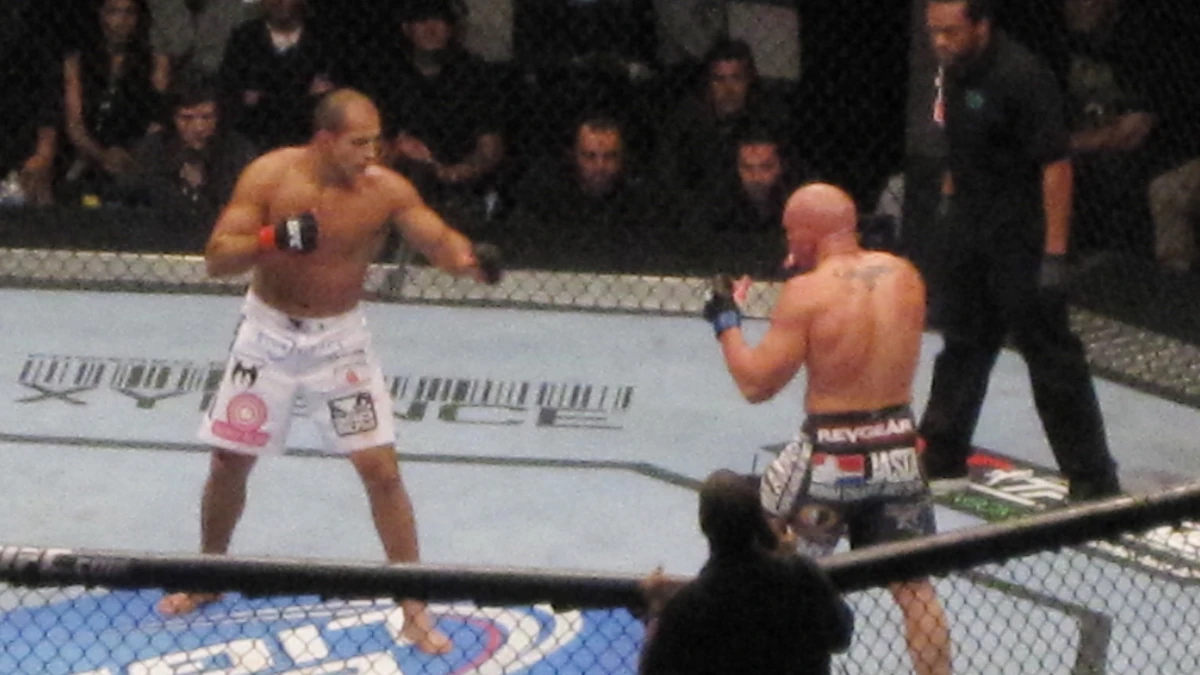
Sheppard and Young’s distinction between change-of-direction (a closed skill executed against a known cue) and reactive agility (an open skill executed against an unfolding opponent cue) extends naturally to combat sport [1]. In MMA at striking range, the cut, the lean, the slip and the simultaneous strike are not pre-planned movements; they are reactive responses to an opponent’s micro-cues, shoulder lift, weight transfer, eye-line shift and the response window is a fraction of the cue-to-impact interval. The geometry of reach changes the size of that window in the fighter’s favour: a longer-reach athlete can land at a distance where the shorter-reach opponent cannot return-strike, which means the cue-reading task is asymmetric.
Young and Farrow formalised the perceptual-cognitive components of agility, visual scanning, pattern recognition, anticipation, action selection [2]. For a striker, scanning is not random; it is targeted at the opponent’s mechanical pre-cues, the movements that necessarily precede a strike of known type. The trained striker scans for cues most predictive of incoming attack, ignores noise, and selects an action (slip, parry, counter-strike, range-reset) before the opponent’s attack reaches landing distance. Reach extends the time available for that perceptual-cognitive sequence, the longer-reach fighter reads, decides, and acts in a window the shorter-reach fighter does not have.
Henry, Dawson, Lay and Young quantified the cost of decision errors in reactive agility tasks: a wrong-direction response adds 200–400 ms to total response time [3]. Translated to striking range, a wrong read at the cue level is the difference between a clean counter and a clean reception of the opponent’s strike. Reach forgives some of this cost, the longer-reach athlete who makes a small read-error still has spatial margin, but it does not eliminate it; the fighter who relies on reach without sharpening cue-reading still gets caught by opponents who close the distance.
Paul, Gabbett and Nassis’s review of agility in team sports applies directly to combat: agility is trainable, the perceptual-cognitive component responds to game-realistic constraint manipulations, and the training adaptation is specific to the cue and movement context [4]. For an MMA striker, this means sparring with constraint-manipulated opponents (height, reach, stance) and with deliberate timing variations builds the perception-action coupling that pad-work alone cannot.
Stølen and colleagues’ synthesis adds the intermittent-recovery layer [5]. A five-round championship MMA fight, with intermittent striking exchanges interspersed with feints, level-changes, and clinch work, places aerobic and anaerobic demand on the system that is not directly visible in any single exchange but is decisive across the round and the fight. The cue-reading capacity is itself fatigue-sensitive, the tired striker reads slower and decides worse and the conditioning base is the upstream variable.
The Case: Adesanya as reach-and-perception specialist
For a 1.93 m / ~84 kg middleweight with an 80-inch reach competing inside the same divisional weight ceiling as opponents whose reach is meaningfully shorter, the geometric advantage is unusual at the divisional norm. The stylistic signature, keeping opponents at the end of straight strikes, using level-changes and lateral movement to deny the shorter-reach inside-fighter the close-range entry, and exiting from exchanges before the opponent’s counter window opens, is consistent with a striker who has integrated reach into a perceptual-cognitive system rather than relying on it passively [1, 2].
The kickboxing background is the relevant developmental context. A long-form striking career in a discipline that explicitly trains distance management, footwork-and-strike timing, and cue-reading at standing range is the substrate Young and Farrow’s framework would predict to underwrite an MMA career and Adesanya’s transition into the cage has retained the standing-range patterns that the kickboxing apprenticeship installed [2, 4]. The conditioning side, less visible but no less important, is what allows the perceptual-cognitive system to keep working into the fourth and fifth rounds [5].
The under-discussed dimension is the cost of reach-dependence. Paul, Gabbett and Nassis note that athletes who specialise in one set of cues sometimes plateau on the others [4]; an MMA striker who relies heavily on reach-and-distance can be exposed by an opponent who closes the distance through grappling or clinch entries, the cue-set is different, the decision context is different, and the training stimulus has to cover both. Adesanya’s career has worked through both ends of this trade-off, including title defences against opponents whose game forced a different perceptual context.
The fatigue interaction is worth a separate note. Henry’s data on decision-accuracy cost suggest that the cue-reading window contracts with cumulative load [3]; a fighter whose conditioning base degrades into the championship rounds gives back the perceptual margin that reach gave him. The conditioning floor is therefore part of the reach-management story, not separate from it.
Performance-context note: across his middleweight UFC career, Adesanya’s distance-strike rate, opponent-strike-attempted-vs-landed differential, and strike-output sustained into championship rounds sit at the upper end of the middleweight distribution (Performance data: UFC Stats). The discriminator is not reach in isolation but the perceptual-motor system built around it.

What This Means for the Reader
For the developing combat athlete, the lesson is that reach is a structural variable but not a self-executing one [1, 2, 4]. The shorter-reach athlete who trains cue-reading harder than the longer-reach opponent can win the perceptual-cognitive race regardless of geometry; the longer-reach athlete who relies on reach without sharpening cue-reading gives back the advantage as soon as the opponent closes the distance.
Practical assessment for amateurs: track three indicators across a training block, a reactive sparring scoring drill (response-accuracy under constrained-cue conditions), a fatigue-resistant cue-reading drill (same scoring task at the end of conditioning work), and a distance-management proxy (strike-rate at the longest range against a moving partner). Drift in any of the three is the early signal that one component of the system is leading or lagging the others.
The diagnostic question for the developing striker: am I winning on geometry or on perception, and does my answer change in round four?
References
- Sheppard JM, Young WB. (2006). Agility literature review: Classifications, training and testing. Journal of Sports Sciences, 24(9): 919–932. doi:10.1080/02640410500457109
- Young WB, Farrow D. (2006). A review of agility: Practical applications for strength and conditioning. Strength and Conditioning Journal, 28(5): 24–29. doi:10.1519/00126548-200610000-00004
- Henry GJ, Dawson B, Lay BS, Young WB. (2013). Decision-making accuracy in reactive agility: Quantifying the cost of poor decisions. Journal of Strength and Conditioning Research, 27(11): 3190–3196. doi:10.1519/JSC.0b013e31828b8da4
- Paul DJ, Gabbett TJ, Nassis GP. (2016). Agility in team sports: Testing, training and factors affecting performance. Sports Medicine, 46(3): 421–442. doi:10.1007/s40279-015-0428-2
- Stølen T, Chamari K, Castagna C, Wisløff U. (2005). Physiology of soccer: an update. Sports Medicine, 35(6): 501–536. doi:10.2165/00007256-200535060-00004
Performance-context data (descriptive only): UFC Stats.

Hüseyin Akbulut is the founder of Sporeus and author of THRESHOLD (EŞİK), a 540-page Turkish-language book on endurance science.
- 540pp THRESHOLD Book
- MSc Sport Sciences
- Marmara University
The Athlete in One Paragraph
Israel Mobolaji Temitayo Odunayo Oluwafemi Owolabi Adesanya (b. 1989-07-22, Lagos, Nigeria; competing for New Zealand) is a former UFC middleweight champion and one of the modern reference points for technical kickboxing translated into mixed martial arts. Listed at 1.93 m and ~84 kg with an…
The Physiology: what striking-distance management actually is
Sheppard and Young's distinction between change-of-direction (a closed skill executed against a known cue) and reactive agility (an open skill executed against an unfolding opponent cue) extends naturally to combat sport [1]. In MMA at striking range, the cut, the lean, the slip and the…
The Case: Adesanya as reach-and-perception specialist
For a 1.93 m / ~84 kg middleweight with an 80-inch reach competing inside the same divisional weight ceiling as opponents whose reach is meaningfully shorter, the geometric advantage is unusual at the divisional norm. The stylistic signature, keeping opponents at the end of straight…
What This Means for the Reader
For the developing combat athlete, the lesson is that reach is a structural variable but not a self-executing one [1, 2, 4]. The shorter-reach athlete who trains cue-reading harder than the longer-reach opponent can win the perceptual-cognitive race regardless of geometry; the longer-reach athlete who…